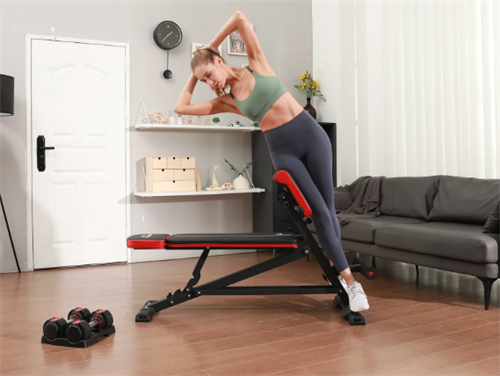

When most people think about a powerful physique, the first image that comes to mind is the “inverted triangle” shape—a wide back tapering down to a narrow waist. This classic silhouette is built on the foundation of one muscle: the latissimus dorsi, or simply, the “lats.” Strong, well-developed lats don’t just look impressive—they also play a vital role in posture, pulling strength, and overall athletic performance.
Why the Lats Matter?
The lats are the largest muscles of the upper back, stretching from your mid-spine down to your pelvis and attaching to your upper arms. Functionally, they’re responsible for pulling your arms down and back, stabilizing your spine, and assisting in many compound movements. A thick, strong set of lats:
Creates the visual width that forms the inverted triangle.
Improves performance in pulling, climbing, and lifting.
Supports spinal stability and posture, reducing the risk of injury.
In short, training your lats isn’t just about aesthetics—it’s about balance, strength, and functionality.
Gold Standard Exercise 1: Pull-Ups
If you could only pick one movement for lat development, the pull-up would be it. This bodyweight classic works your lats through a full range of motion while also engaging your biceps, traps, and core.
Key tips:
Use a shoulder-width or slightly wider grip to maximize lat recruitment.
Focus on driving your elbows down toward your ribs rather than just pulling with your arms.
Control the eccentric (lowering) phase to stretch the lats fully.
Can’t do a full pull-up yet? Assisted pull-ups or band pull-ups are excellent progressions.
Gold Standard Exercise 2: Lat Pulldowns
Think of lat pulldowns as the pull-up’s cousin. While the machine makes it easier to adjust resistance, the movement pattern closely mirrors a pull-up, making it an excellent tool for isolating the lats.
Key tips:
Avoid leaning back excessively—keep your torso upright to prevent the exercise from turning into a row.
Use a smooth, controlled motion and pause briefly at the bottom for maximum contraction.
Experiment with grip variations (wide, neutral, underhand) to hit the lats from different angles.
Pulldowns are especially useful for beginners and for adding volume without overtaxing your recovery.
Gold Standard Exercise 3: Barbell Rows
Rows build thickness and strength in the mid-back while heavily recruiting the lats. The barbell row, in particular, is a powerhouse because it loads the lats with significant weight and requires core stability.
Key tips:
Maintain a flat back with a slight hip hinge to protect your spine.
Pull the bar toward your lower rib cage, not your chest, to keep the focus on the lats.
Avoid jerking or using momentum—controlled reps ensure muscle engagement.
Rows complement vertical pulls like pull-ups and pulldowns, giving you both width and density.
Gold Standard Exercise 4: Dumbbell Rows
The dumbbell row allows for a longer range of motion and unilateral training, which helps correct imbalances between sides. It also gives you the freedom to adjust your angle slightly to emphasize different parts of the lats.
Key tips:
Support yourself with one hand on a bench or rack to stabilize your torso.
Let the dumbbell hang fully at the bottom, stretching the lat, before pulling it back in.
Focus on pulling with your back, not just your arm.
This movement is often underrated, but its ability to isolate one side at a time makes it invaluable for symmetry.
Gold Standard Exercise 5: Straight-Arm Pulldowns
Unlike most pulling exercises, the straight-arm pulldown isolates the lats with minimal assistance from the biceps. Think of it as a “finisher” that teaches you to engage the lats directly.
Key tips:
Keep your arms straight (with just a slight bend in the elbows).
Drive the cable or band down in an arc while maintaining tension.
Perform higher reps to maximize the mind-muscle connection.
This exercise reinforces proper lat activation, which can carry over to your bigger lifts.
The inverted triangle physique isn’t built overnight—it takes consistency, progressive overload, and a smart mix of exercises. The lats are large, complex muscles, and they respond best when trained from multiple angles with both heavy compound lifts and targeted isolation.
Recommend:

Listen to Your Body: Intuitive Training Is Replacing Rigid Plans

Common Mistakes and Corrections for the Three Major Exercises: Squats, Bench Press, and Deadlifts

Stair Climber, Elliptical Trainer, Spin Bike: Which Cardio Equipment Is Best for You?

Foam Rollers and Myofascial Guns: How to “Feel the Pain and Enjoy It” Scientifically?