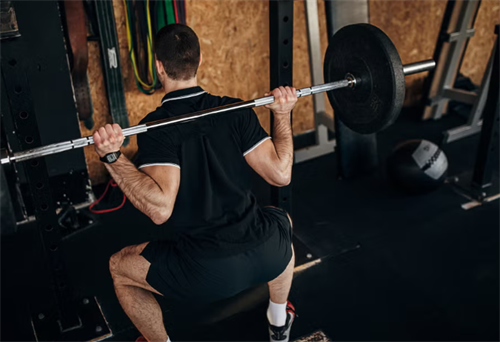
The squat is often called the king of lower-body exercises, and for good reason. It builds strength in your quads, glutes, hamstrings, and even your core, making it one of the most effective movements in the gym. But did you know that not all squats are created equal? Two popular variations—the high-bar squat and the low-bar squat—may look similar at first glance, but their technical differences change how the exercise feels and what muscles it emphasizes.
If you’ve ever wondered which style suits your goals best, let’s break it down in simple, practical terms.
High-Bar Squat: The Upright Classic
In the high-bar squat, the barbell rests across the trapezius muscles (the “meaty” part of your upper back), just below the base of the neck. This placement keeps the torso more upright throughout the movement.
1. Key characteristics
Torso Position: More vertical.
Knee Travel: Knees move further forward over the toes.
Depth: Typically allows for deeper squats.
Muscles Emphasized: Quadriceps take the lead, with strong support from the glutes.
Because of its mechanics, the high-bar squat closely resembles the natural movement pattern of sitting down and standing up. It’s commonly used in Olympic weightlifting since an upright torso is essential for catching cleans and snatches.
2. Best for
Athletes who want to develop explosive leg strength.
Lifters with long torsos or shorter femurs (as upright squats feel more natural).
Those prioritizing quad growth.
Low-Bar Squat: The Powerlifter’s Choice
In the low-bar squat, the bar rests lower on the back—across the rear deltoids, just below the spine of the scapula. This shift changes the entire squat mechanics, tilting the torso forward and shortening the distance the bar has to travel.
1. Key characteristics
Torso Position: More forward lean.
Hip Movement: Greater hip hinge, less forward knee travel.
Depth: Often slightly shallower compared to high-bar, though still parallel or below.
Muscles Emphasized: Glutes, hamstrings, and posterior chain take on more load, though quads are still active.
This bar position and hip-dominant movement pattern allow most lifters to move heavier weights. That’s why the low-bar squat is favored in powerlifting competitions where the goal is to lift the maximum amount of weight.
2. Best for
Lifters aiming to maximize total squat strength.
Athletes with shorter torsos and longer femurs (who often find the forward lean more natural).
Those looking to build posterior chain strength.
3. Technical Differences in Action
The differences between high-bar and low-bar squats aren’t just about where the bar sits—they impact the entire chain of movement.
-Bar Path:
High-bar: Bar moves in a more vertical line.
Low-bar: Bar follows a slightly angled path due to forward torso lean.
-Joint Stress:
High-bar: Greater stress on the knees (because of forward knee travel).
Low-bar: Greater stress on the hips and lower back (because of hip hinge and torso angle).
-Range of Motion:
High-bar: Usually allows a deeper squat, increasing quad activation.
Low-bar: Slightly reduced depth, but more overall muscle recruitment across the posterior chain.
-Load Capacity:
High-bar: You’ll likely lift less compared to low-bar.
Low-bar: Allows most lifters to move more weight, thanks to mechanical leverage.
Which Should You Choose?
There’s no universal “better” squat—it depends on your goals and body mechanics.
1. For Muscle Growth: Both are excellent, but high-bar squats may be better for quad development, while low-bar squats build glutes and hamstrings.
2. For Strength: Low-bar squats give you a mechanical advantage for heavier loads, which is why powerlifters favor them.
3. For Athletics: High-bar squats carry over more directly to sports that demand upright posture and explosive movement.
4. For Longevity: If knee pain is a concern, some prefer low-bar squats; if hip or lower-back stress is an issue, high-bar might feel safer.
High-bar and low-bar squats are like two sides of the same coin. Both will strengthen your legs, improve your athleticism, and build serious muscle when done correctly. The real key is to understand their differences and choose the one that aligns with your body type and training goals.
Better yet—why not include both? Rotating between high-bar and low-bar squats in your program can balance quad and posterior chain development, reduce overuse, and make you a more well-rounded lifter.
Recommend:
Understanding the Data from the Treadmill: The Truth about Incline, Speed and Calories
Fitness Bloggers, Online Fitness Coaches: How Social Media Has Changed Our Training?
Isolation Training vs. Compound Training: How to Arrange Your Movement Sequences?
Multifunctional Training Chair: The Core Equipment of the Home Gym